Per-Call Model Selection: Measuring Cost and Quality Across a Multi-Agent Run

Every multi-agent framework asks one question before the first task arrives: which model does each agent use?
planner    = Agent(role="planner",    model="small-model")
summarizer = Agent(role="summarizer", model="small-model")
reviewer   = Agent(role="reviewer",   model="frontier-model")
writer     = Agent(role="writer",     model="small-model")
It looks like configuration. It is really a prediction, made once, about work nobody has seen yet.
A task never reaches a model as one request. It arrives as a stream of calls: list the changed files, summarize a module, search for a concurrency bug, write the final comment. Bind a model to an agent and every one of those calls gets the same answer, hard or trivial.
vLLM Semantic Router moves that choice onto the request. Every agent sends one model name, MoM, short for mixture of models. It is not a model but a virtual name the router resolves per call, from what the call contains, using signals and decisions written in YAML. Throughout this post, local means a small model on your own machine, free and slower, and frontier means a large hosted model, billed per token and fast.
To see what changes, we ran one four-agent crew four ways, all frontier, model per agent, model per call and all local, recording every call: which model served it, which decision chose it, what it cost, and how long the router took to decide.
Per-call routing sent 2 of 16 calls to the frontier model and cost $1.37 per 1,000 reviews. That is one fifth the cost of sending everything to the frontier model, and less than half the cost of a hand-tuned per-agent setup. It found 4 of 6 seeded bugs, matching the all-frontier arm and beating per-agent binding, which found 3. The router took 1.86 ms at p50 to make each choice.
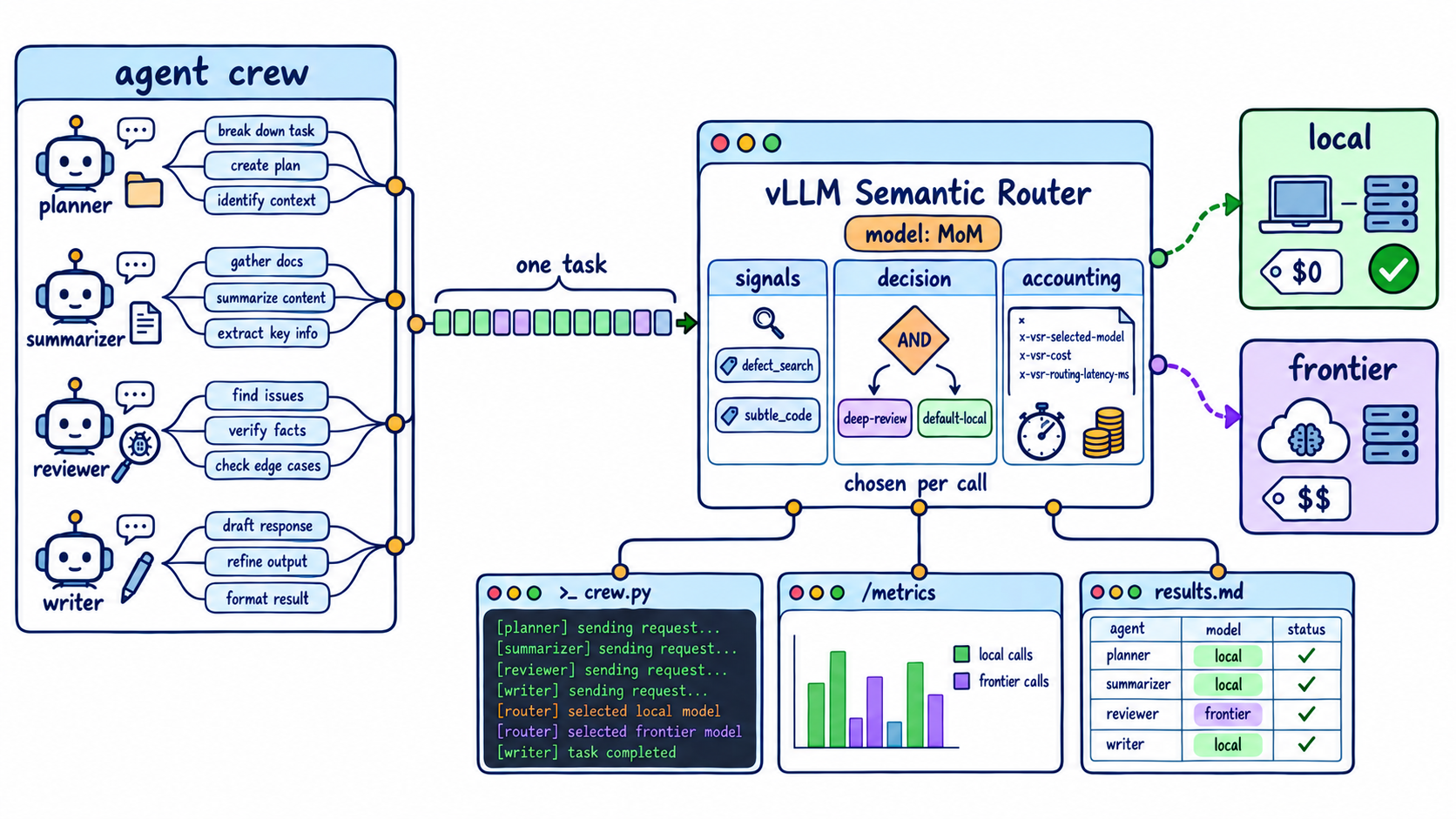
Figure 1: One task is a stream of calls. The router chooses a model for each one and records why.
One Task, Many Calls
The example workload is a pull-request review: one agent explores the change, one summarizes it, one searches for defects, one writes the comment. The pattern matters more than the domain, and each agent makes calls of very different difficulty.
| Agent | What its calls do | Calls per task |
|---|---|---|
| Planner | Explores the change with tools, then plans the review | 5 |
| Summarizer | Writes one sentence per changed file | 4 |
| Reviewer | Searches each code file for defects | 6 |
| Writer | Turns the notes into the final comment | 1 |
| Total | 16 |
The reviewer row is where per-agent binding overpays. Reviewing a pagination helper and reviewing unsynchronized shared state are the same agent doing very different work. A per-agent setup has to send both to the same model.
The Model Becomes a Property of the Request
With vLLM Semantic Router in front of the models, the per-agent model strings collapse into one client:
from openai import OpenAI

router = OpenAI(base_url="http://localhost:8899/v1", api_key="unused")

# every agent, every call
router.chat.completions.create(model="MoM", messages=messages, tools=tools)
Any OpenAI-compatible agent framework takes those same two settings, a base URL and a model name. The crew code no longer holds a model choice at all; it lives in the router's configuration, where an operator can change it without touching the agents.
Per-agent binding still works on the same endpoint: an agent that sends local or frontier by name is served by that model directly, which is how the comparison arms below all run through one router.
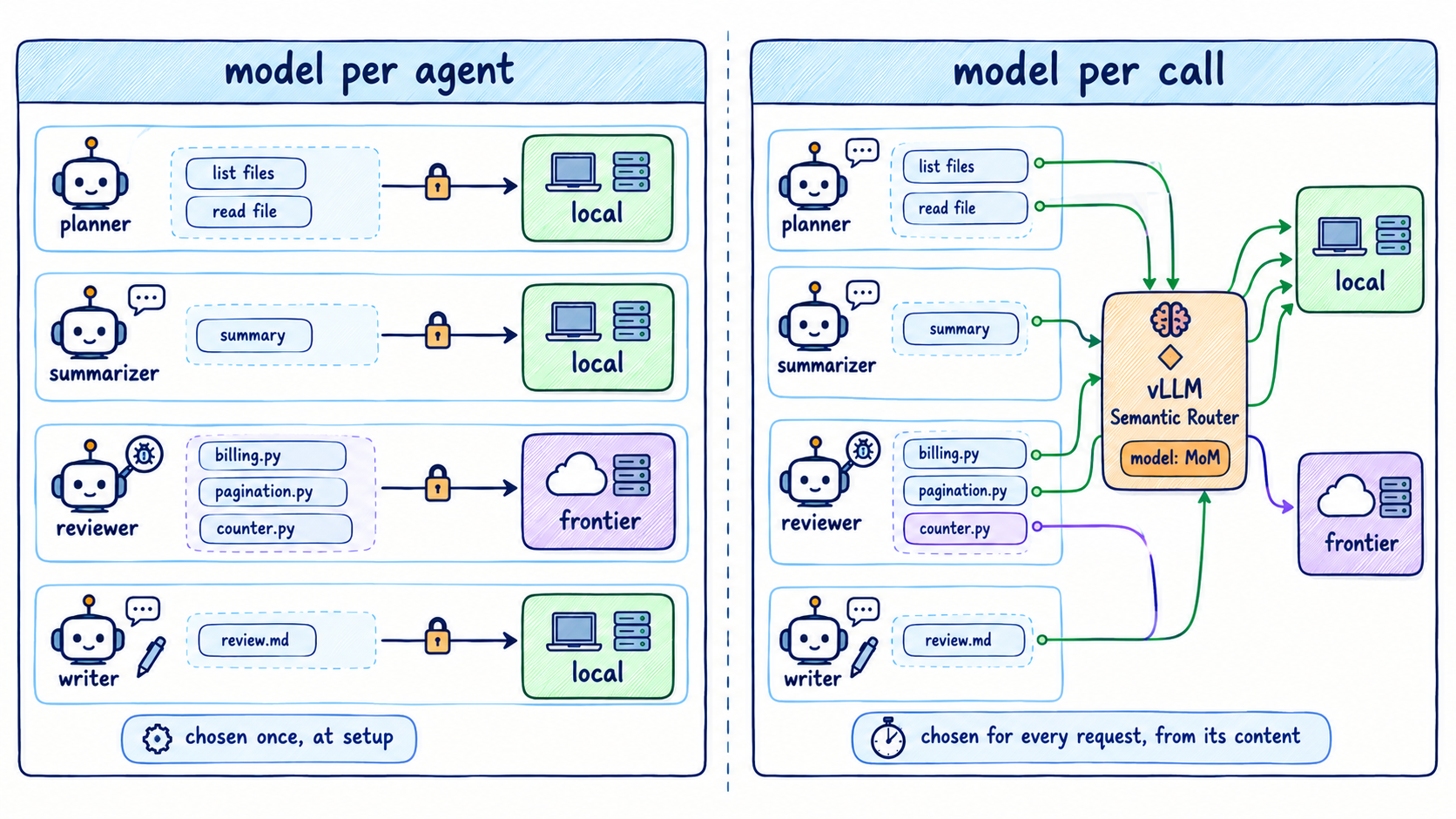
Figure 2: Per-agent binding decides once, at setup time. Per-call routing decides on every request, from its content.
How vLLM Semantic Router Chooses
The choice is three configured parts. Signals observe the request, decisions combine them with AND or OR rules ranked by priority, and each decision names the model it gets. The whole policy for this run reads in one screen:
routing:
  signals:
    keywords:
      - name: defect_search          # what the call asks for
        operator: OR
        keywords: ["find the defects"]
      - name: subtle_code            # code whose bugs are subtle
        operator: OR
        keywords: [threading, asyncio, multiprocessing, concurrent,
                   subprocess, pickle, password, secret_key]

  decisions:
    - name: deep-review
      priority: 200
      rules:
        operator: AND
        conditions:
          - { type: keyword, name: defect_search }
          - { type: keyword, name: subtle_code }
      modelRefs:
        - model: frontier

    # plus a default-local fall-through at priority 10, pointing at `local`
A call goes to the frontier model only when it asks for a defect search and the code involves concurrency, processes or secrets. Summarizing a threaded module stays local, and so does searching a pagination helper. The fall-through is local on purpose: a gap in the policy then shows up as a missed defect, never as a surprise on the bill.
Keyword signals need no classifier model, which keeps choosing cheap enough to measure on every call. The same decisions accept the router's other signal families, such as embedding similarity, complexity and domain, with no change to the agents.
One property matters for agent traffic: signals read the latest user message, and tool results never change a decision. A tool loop therefore stays on the model that started it, and the choice changes where the work changes, between agents and between files.
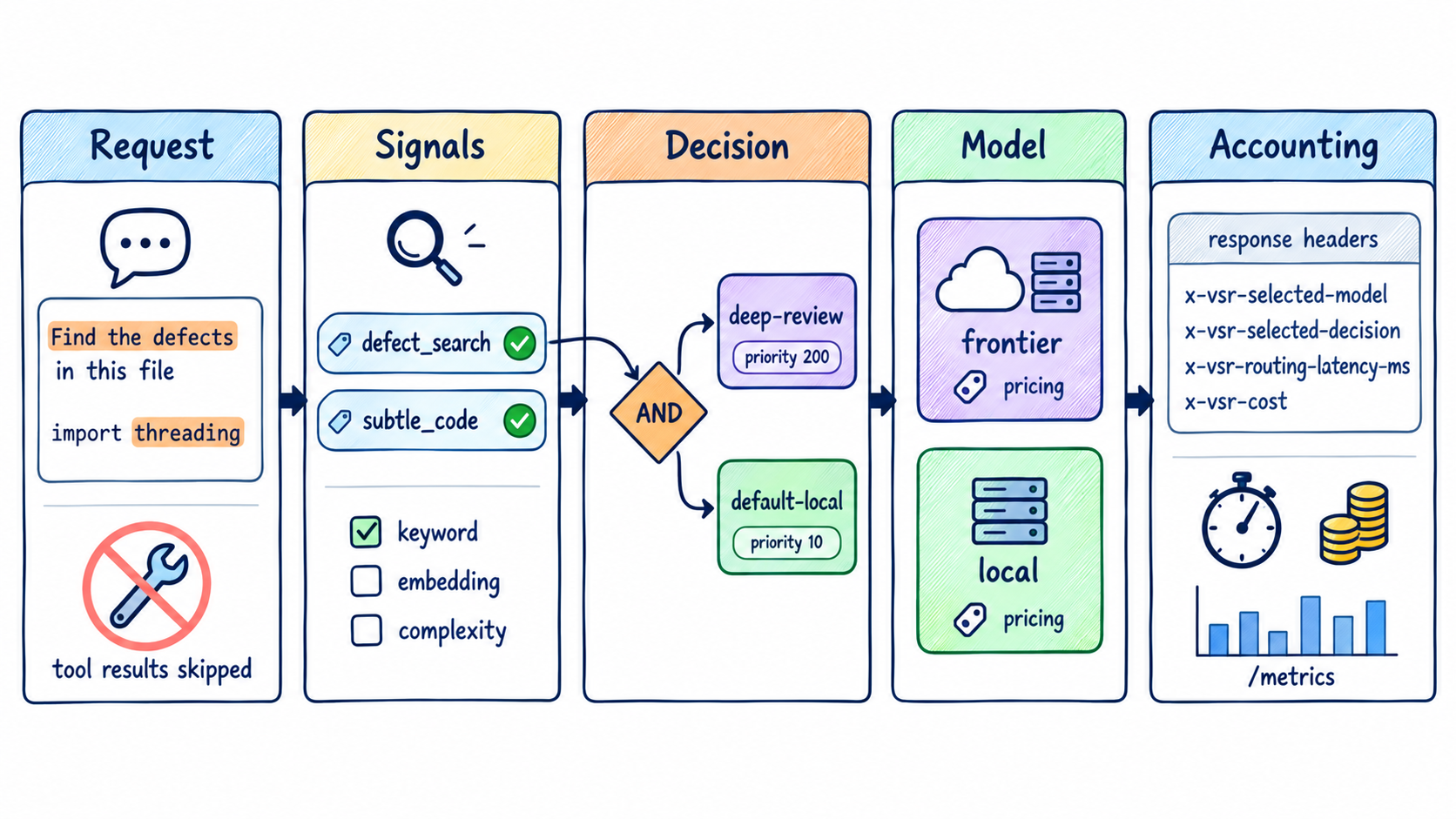
Figure 3: Each call passes through signals and a decision, and leaves with its routing and cost recorded.
Every Call Is Accounted For
Choosing per call is only useful if every choice can be explained afterwards. The router returns the routing facts on each response and keeps running totals on its Prometheus endpoint:
| Surface | Field | What it tells you |
|---|---|---|
| Response header | x-vsr-selected-model | The model that served this call |
| Response header | x-vsr-selected-decision | The decision that chose it |
| Response header | x-vsr-routing-latency-ms | Time the router spent choosing |
| Response header | x-vsr-cost, x-vsr-cost-currency | This call's cost, priced from the model's pricing block |
/metrics | llm_model_cost_total{model,currency} | Running cost per model |
/metrics | llm_model_routing_latency_seconds | Routing time across all calls |
One request shows all of it:
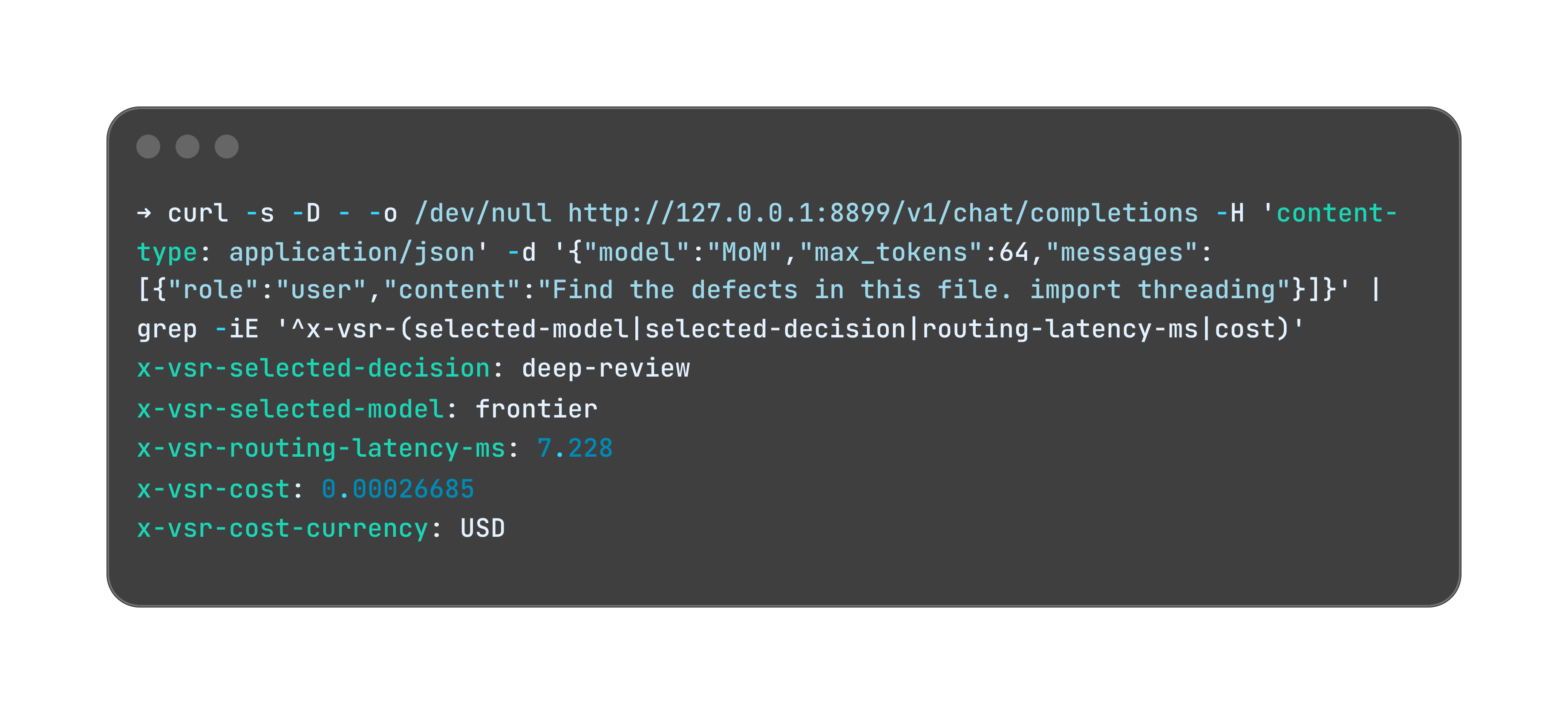
Figure 4: The router explains every call it serves, on the response itself.
Cost comes from a pricing block on each model, which the router multiplies by the real token counts. The crew computes nothing itself, so every number below is available to any deployment running the router. Prices are xAI's published list prices as of 2026-09-11, which makes cost here the router's own accounting, not a provider invoice.
Evaluation Setup
The crew reviews one pull request across four files, carrying six seeded defects from obvious to subtle:
| # | File | Defect |
|---|---|---|
| D1 | counter.py | Shared total read and written back without the lock |
| D2 | counter.py | Error counter not synchronized either |
| D3 | billing.py | parse_amount fails on None or empty string |
| D4 | billing.py | Bare except: pass drops line items silently |
| D5 | billing.py | Money computed with float |
| D6 | pagination.py | Slice ends one short, dropping each page's last row |
Four arms run the identical crew, prompts and file order. Only the model name each agent sends changes: frontier everywhere, frontier for the reviewer and local for the rest, MoM everywhere, or local everywhere.
The model-per-agent arm is what a careful team would write by hand, the expensive model only where the hard thinking happens. It is the baseline per-call routing has to beat, and the all-local arm shows what routing buys over simply going cheap.
| Setting | Value |
|---|---|
| Router image | sha256:81adc125, built 2026-09-24 |
| Local model | llama3.2:3b, served by Ollama on CPU |
| Frontier model | grok-4.20-0309-non-reasoning, xAI |
| Runs per arm | 3, temperature 0 |
| Limits | 1,024 output tokens per call, 6 calls per conversation |
| Response cache | Off, so every call reaches a model and is priced |
| Quality | Defects named in the final review, graded by hand |
Grading was blind: the reviews were shuffled, the arm labels hidden, and each was scored against a fixed answer key written before the runs. Quality is graded on the final review comment, which is what a user of the crew receives. Every table below reports the median of 3 runs, with the range where it matters.
Result 1: One Task Is 16 Calls, and 2 Need the Frontier Model
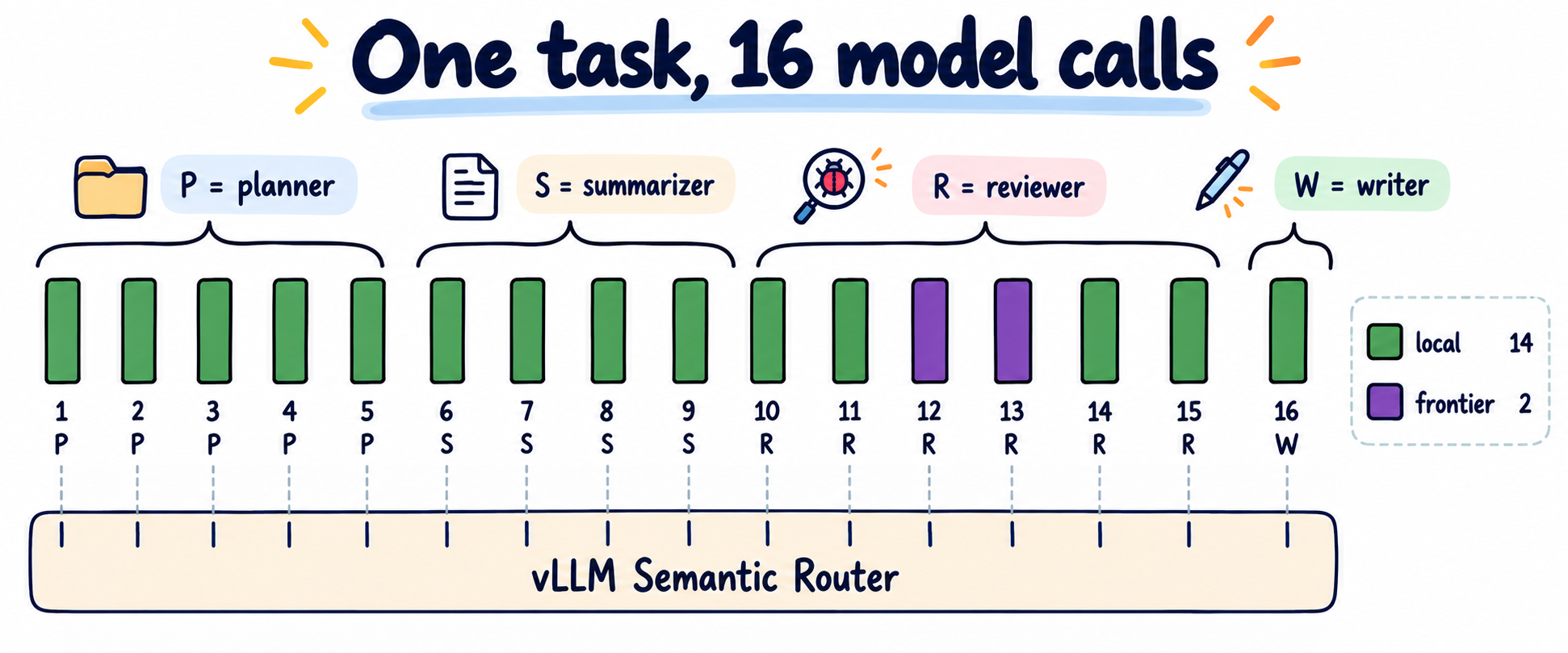
Figure 5: One per-call run, the one with the median call count. Each tick is a call, coloured by the model chosen.
| Agent | Calls to local | Calls to frontier |
|---|---|---|
| Planner | 5 | 0 |
| Summarizer | 4 | 0 |
| Reviewer | 4 | 2 |
| Writer | 1 | 0 |
| Total | 14 | 2 |
The policy escalated exactly two calls, both the reviewer working on counter.py, the one file that uses threads. The reviewer's other four calls asked for a defect search too, but on code this policy does not consider subtle, so they stayed local, as did the summary of counter.py.
That is the split a per-agent setting cannot express: one agent, six calls, two of them worth the expensive model. The planner's five calls, meanwhile, are a single tool loop that stayed on one model throughout, because the signals read the instruction that started it.
Result 2: Cost, Time and Quality Across the Four Arms
| All frontier | Model per agent | Model per call | All local | |
|---|---|---|---|---|
| Model calls per task | 14 | 16 | 16 | 16 |
| Calls served by frontier | 14 | 6 | 2 | 0 |
| Prompt tokens | 7,918 | 7,725 | 7,605 | 7,770 |
| Completion tokens | 986 | 899 | 1,651 | 2,115 |
| Cost per 1,000 reviews | $6.88 | $2.87 | $1.37 | $0 |
| Defects found (of 6) | 4 (4 to 4) | 3 (3 to 4) | 4 (0 to 5) | 0 (0 to 1) |
| Wall time (s), local model on CPU | 19.3 | 80.0 | 193.8 | 290.0 |
Median of 3 runs per arm. Wall time tracks where the calls ran, not how long the router took to route them: the local model here is a 3B model on CPU, so any arm that sends more calls to it takes longer. The router's own share was 0.019 percent.
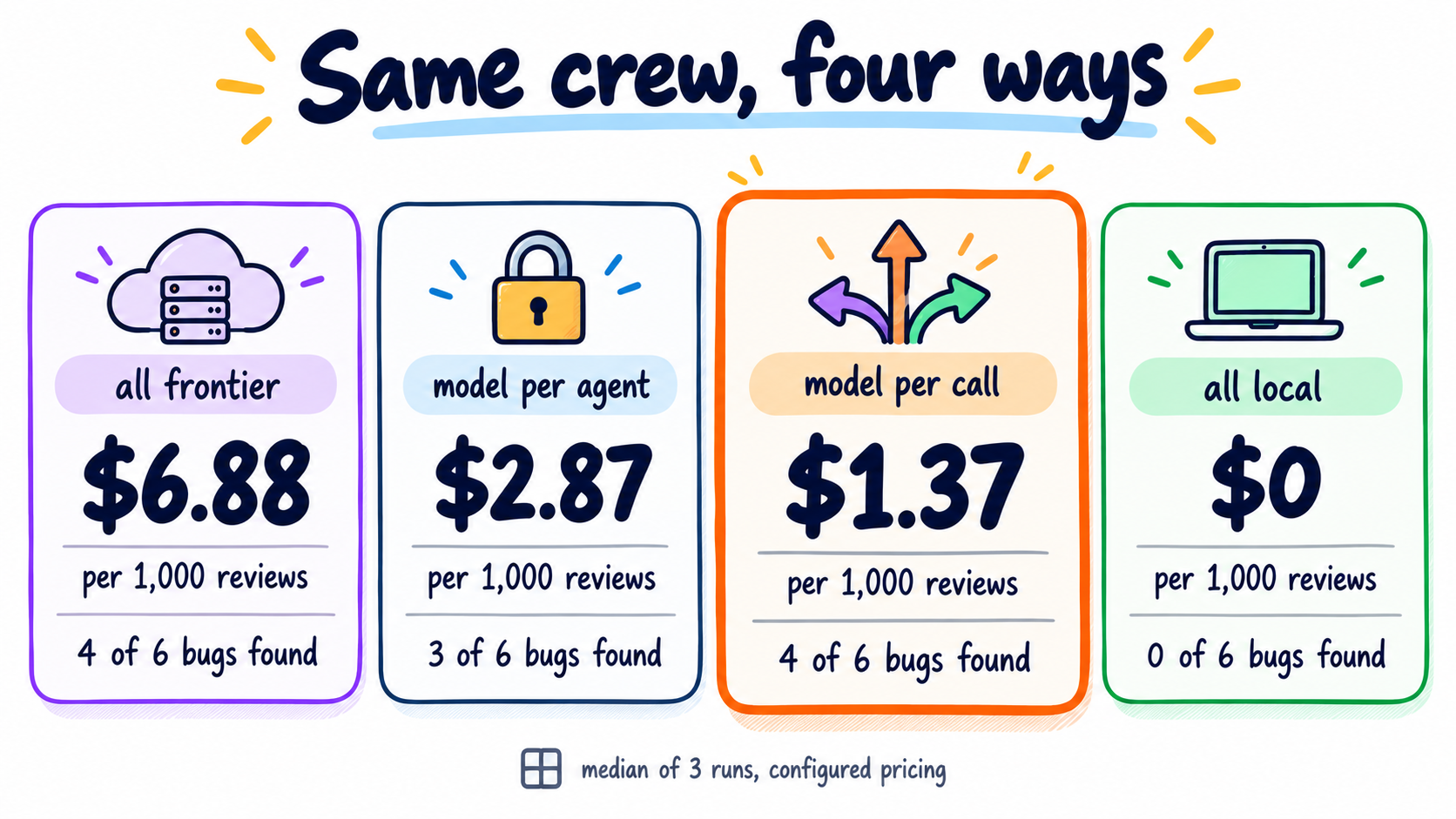
Figure 6: The same crew, four ways. Cost from configured pricing, defects graded on the final review.
Costs are per thousand reviews because one review costs a fraction of a cent, which is hard to compare at a glance.
Against per-agent binding, per-call routing cost $1.37 against $2.87 and found 4 bugs against 3. The hand-tuned baseline paid for six frontier calls because its reviewer was bound to the frontier model; per-call routing paid for two and lost nothing by it. That saving comes from splitting one agent's work, which a per-agent setting cannot express.
Against the ceiling, it found the same median of 4 bugs for a fifth of the cost. Against the floor, the difference is the review itself: all-local found a median of 0, and two of its three runs reported no defects at all.
The trade is time, and it is a property of the local deployment rather than the router. Serving the same local model on faster hardware changes that column and nothing else in the table, because the model, the cost and the answers stay the same.
Result 3: Choosing Costs 1.86 ms
| Measure | Value |
|---|---|
| Calls measured | 48 |
| p50 | 1.86 ms |
| p95 | 5.07 ms |
| Max | 10.52 ms |
| Median model call | 4.38 s |
| Routing share of wall time | 0.019% |
The router measures this itself and returns it on every response in x-vsr-routing-latency-ms, so it is not an estimate from outside. A median model call took 4.38 seconds; the decision in front of it took under 2 milliseconds.
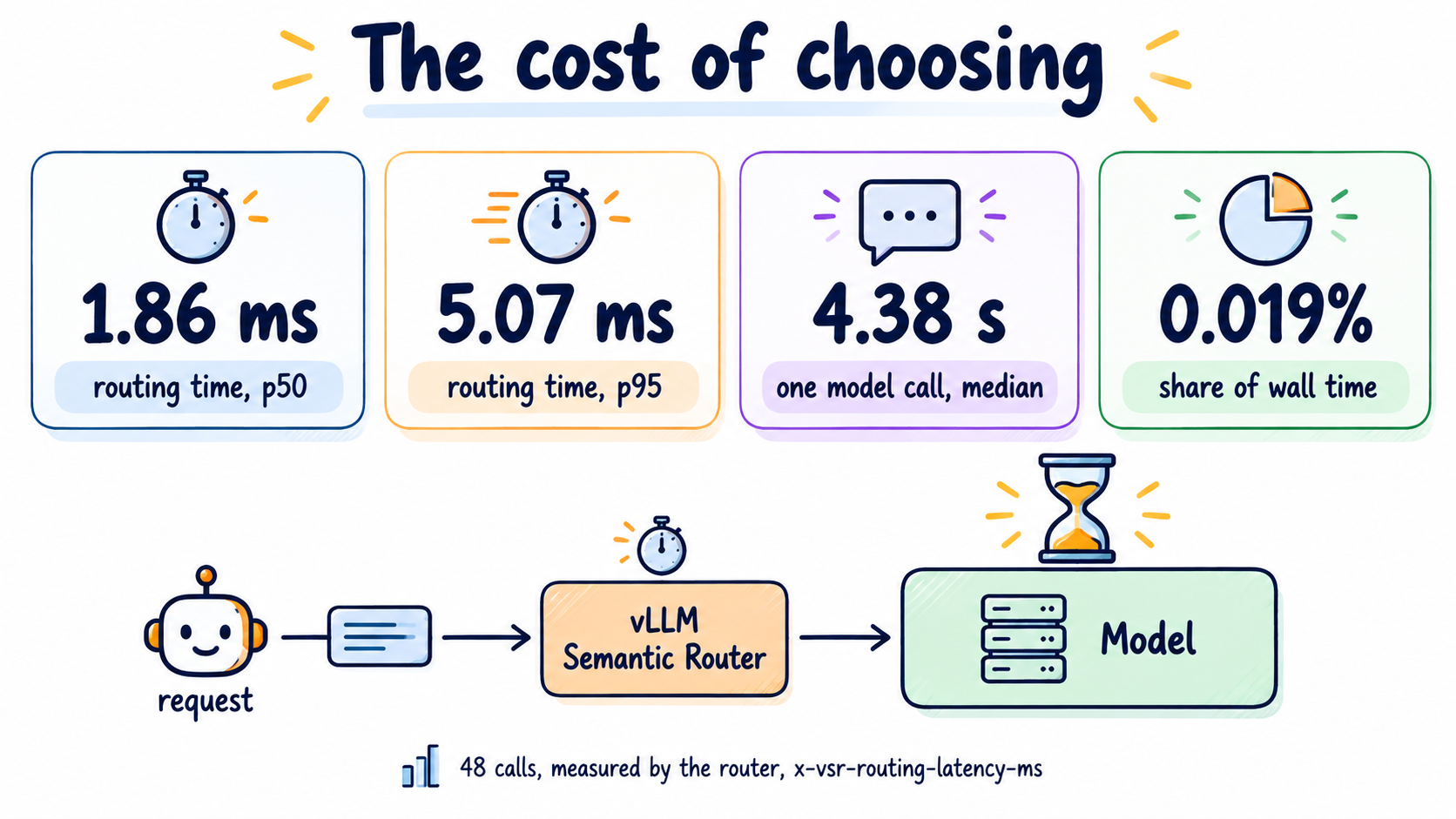
Figure 7: Choosing is a very small slice of the time an answer takes.
These figures are for keyword signals. Signal families that run a model, such as embedding similarity or complexity scoring, add their own inference time and should be measured separately.
What the Policy Missed
| Defect | All frontier | Model per agent | Model per call | All local |
|---|---|---|---|---|
| D1 unlocked read-modify-write | 3 of 3 | 3 of 3 | 2 of 3 | 0 of 3 |
| D2 unsynchronized error counter | 3 of 3 | 1 of 3 | 1 of 3 | 0 of 3 |
D3 None amount | 0 of 3 | 0 of 3 | 2 of 3 | 0 of 3 |
D4 bare except | 3 of 3 | 3 of 3 | 2 of 3 | 1 of 3 |
| D5 float money | 0 of 3 | 0 of 3 | 0 of 3 | 0 of 3 |
| D6 pagination off-by-one | 3 of 3 | 3 of 3 | 2 of 3 | 0 of 3 |
How many of the 3 runs of each arm named the bug in the final review.
Two rows are not routing results. D5 was found by no arm, even with every call on the frontier model, so no policy could have routed around it. D3 was found only by per-call, in a file it kept local, which at three runs is variation rather than evidence.
The row that is a routing result is the per-call arm's spread: 5, 4 and 0. In the zero run the router escalated the reviewer's counter.py calls as designed and the frontier model found the race, then the local writer turned those notes into a comment saying the defects had already been addressed.
That is a policy gap, and a precise one: the write step's prompt carries the findings but none of the words the policy escalates on, so it falls through to local. Escalating it costs one more call; leaving it local means a small model will sometimes lose what a large one found. Either way the router reports the choice, so the gap is visible rather than silent. The keyword list was not changed to improve any of these numbers.
Reproduce It
The crew, the router configuration, the pull-request fixture and the grading key are in bench/agent_crew/. With Ollama serving llama3.2:3b and an xAI key in XAI_API_KEY:
cd bench/agent_crew/configs
vllm-sr serve --minimal --config crew.yaml
Then, from bench/agent_crew:
for arm in all-local per-call per-agent all-frontier; do
  python crew.py --arm $arm --repeat 3 \
    --router-metrics-url http://127.0.0.1:9190/metrics
done

python grade.py --ungraded --blind
python report.py --figures
One arm at a time, because the /metrics counters cover the whole router. Any OpenAI-compatible backend can stand in for the frontier model: change its backend_refs and pricing block, and the arms and the reported cost follow.
Each run records every call, the model that served it and what it cost, and report.py turns those files into the table above. The grading key was written before the runs, so anyone who disagrees with a score can re-grade the same reviews by a different standard.
What This Changes for vLLM Users
- Model choice moves out of agent code and into the router, versioned with the rest of the serving configuration.
- The unit of choice becomes the call. Hard and trivial calls from one agent can go to different models, which a per-agent setting cannot express. Here that was the whole saving: 2 frontier calls instead of 6, at the same measured quality.
- Choosing is cheap enough to ignore, 1.86 ms at p50.
- Per-agent binding still works on the same endpoint, so teams can adopt per-call routing one agent at a time.
- Every choice is attributable, so a policy can be tuned from production traffic instead of guessed at.
- Start with a local fall-through. A policy that escalates only on clear signals fails toward lower cost, and its misses show up in quality results rather than hidden in the bill.
There is open work on signal families for agent traffic, per-call evaluation suites and observability for multi-agent runs: GitHub, docs, and the #semantic-router channel on vLLM Slack.